
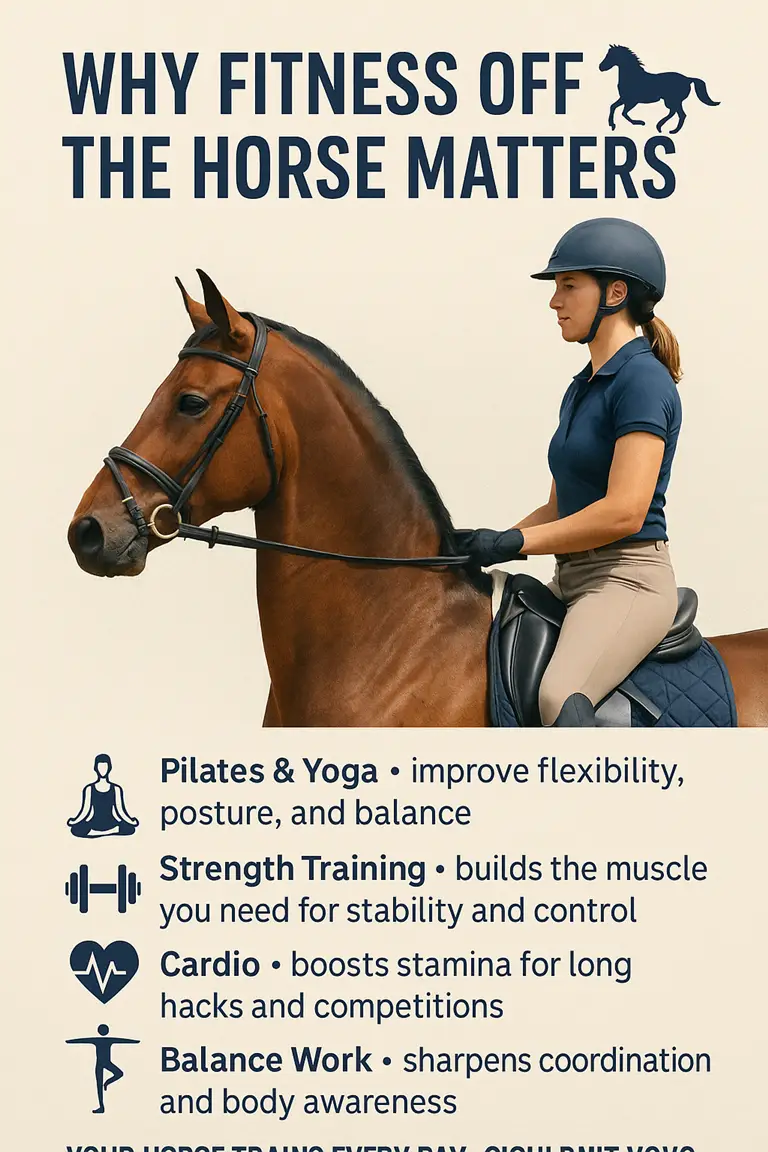
Stronger Rider • Happier Horse
Cross-Training: The Key to Coordinated Performance & Injury Prevention
Riding is more than just seat time under saddle. It’s a high‑demand partnership where both horse and rider must perform in harmony. That’s why complementary cross‑training—such as Pilates, yoga, strength training, cardio, and balance work—is not a luxury—it’s essential. Here’s what evidence tells us:
What the Research Says
Core Strength Is Everything
- A 2025 narrative review concluded that strong abdominal muscles are essential for equestrian athletes, meaning core training could benefit riders across disciplines.glenwoodfarm.usWikipedia+7NSUWorks+7repository.essex.ac.uk+7
- A 2023 study found that horseback riding itself improves core strength, endurance, balance, and limb strength—but clearly, targeted training amplifies those benefits.ScienceDirect
Cross-Training Boosts Symmetry & Performance
- One study showed that an eight‑week off‑horse core fitness program significantly improved rider symmetry—and even increased horse stride length by 8.4%. Improvements in muscular endurance correlated more strongly with better riding scores than simple strength gains.coast-physical-therapy-services.com+1
Riders Know It—but Not Enough Take Action
- A 2025 survey of equestrian riders found that 98.3% believe fitness impacts performance, yet only 63.9% engage in cross‑training. Many still rely on riding alone—despite evidence that on‑horse training alone doesn’t improve aerobic fitness effectively.ResearchGate
Off-Horse Fitness Improves Riding Position
- A UK study showed that nearly 90% of riders believe off-horse exercise improves their seat. Among fitness factors, most identified core stability as having the biggest impact—followed by balance and posture. After a tailored fitness intervention, riders demonstrated a more stable, “quiet” seat, particularly visible through reduced pressure asymmetries.
Core Stability Reduces Injury Risk
- Focused training in core stability not only enhances performance—it also helps withstand the unexpected, reducing strain-related injuries, improving balance, and supporting refined communication through a steady, independent seat.
Why It Matters: Rider + Horse Wellness
- Endurance & Stability: Cross-training strengthens posture and stamina, letting the rider remain balanced even during challenging maneuvers—resulting in better ride quality and less strain on the horse.
- Preventing Imbalance and Injury: A symmetrical, strong rider promotes balanced horse movement. Conversely, an unstable seat can lead to asymmetry, back pain, or broader musculoskeletal issues for both partners.
- Performance Gains: A rider with improved endurance, flexibility, and core tone communicates more subtly and effectively—even enhancing measurable outcomes like test scores and stride efficiency.
Sample Cross-Training Toolbox
| Fitness Type | Target Benefits |
|---|---|
| Pilates / Yoga | Improves core strength, flexibility, posture, mental focus |
| Strength Training | Builds muscle endurance for seat control—think squats, rows |
| Cardio (e.g. running, cycling) | Boosts rider stamina; aids recovery during long rides |
| Balance Drills | Enhances overall stability; reduces fall risk |
Add just 2–3 short sessions per week, and over time you’ll notice a stronger seat, steadier balance, and smoother signals. Your horse will thank you with improved movement, relaxed back, and better responsiveness.