
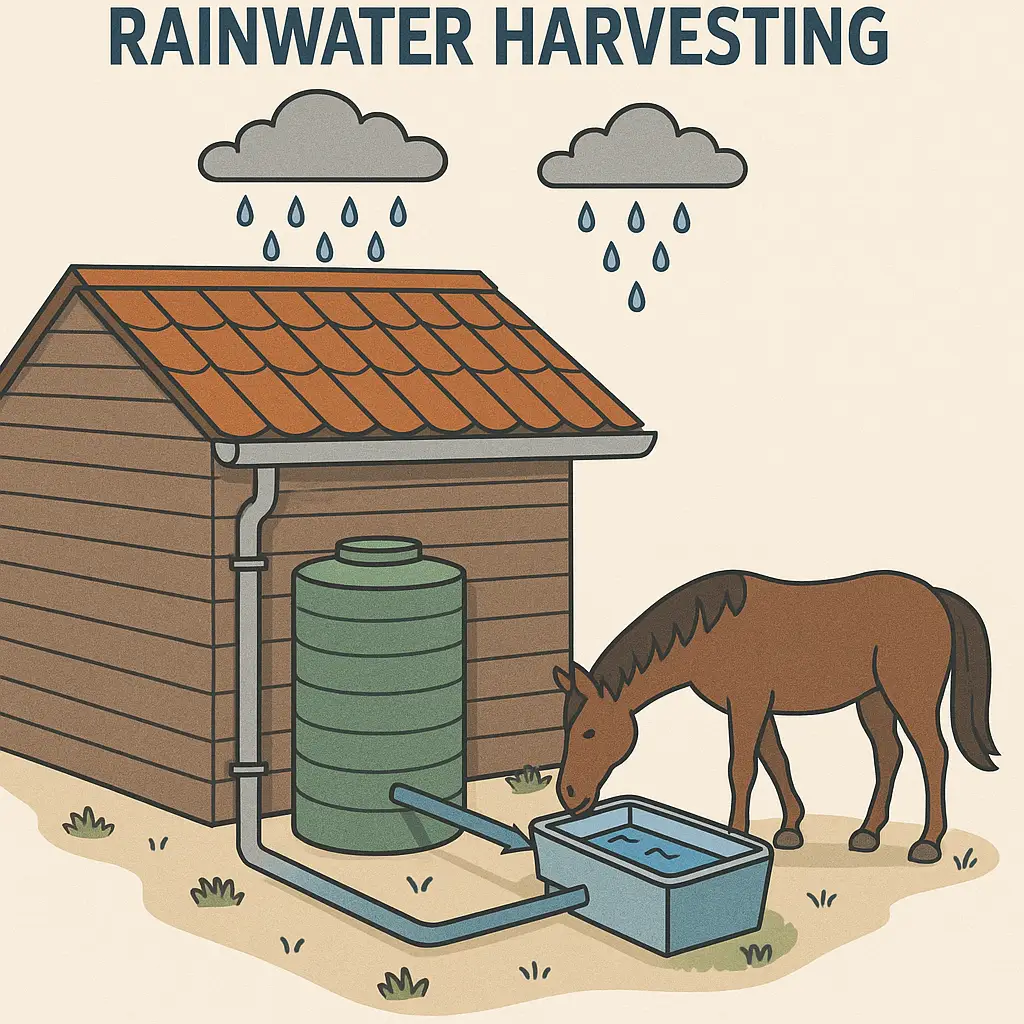
Harnessing Rainwater: Why Harvested Water is Better for Our Horses
When you think of rain in the UK, it’s usually about muddy paddocks, soggy coats, and waterproofs that never quite keep the damp out. But at the stables, rain is also one of our greatest resources. Rainwater harvesting is something we’re increasingly looking at here at the yard – and not just because it saves money on water bills. The truth is, rainwater is often better for the horses than tap water, and it comes straight from the sky without the added chemicals.
Why Rainwater is Better for Horses
Horses, like us, are sensitive to what’s in their drinking water. Mains water is treated with chlorine and other chemicals to keep it safe for human consumption, but those treatments aren’t always ideal for equine digestion. Rainwater, by comparison:
- Is naturally soft – free from high levels of minerals like lime and calcium, which can sometimes build up in equipment and buckets.
- Contains no chemical additives – making it a purer, more natural option that horses instinctively prefer.
- Is closer to what horses drink in the wild – streams, rivers, and rain pools, which can help with hydration and overall health.
Many owners notice their horses drink more readily from rainwater supplies than from mains-fed troughs, which in turn helps keep them healthier and better hydrated.
The Practical Challenges of Harvesting Rainwater
Sounds simple, right? Just catch the rain and pipe it into a tank. The reality, especially on older stable blocks like ours, is more complicated. Many traditional yards were built without modern guttering or downpipes, which means there’s no easy way to channel rain into storage. Setting up a rainwater harvesting system involves:
- Installing guttering along stable roofs where none exists.
- Creating downpipes that funnel water safely into storage tanks.
- Adding filters and first-flush systems to remove leaves, dirt, and debris from the roof before it enters the water supply.
- Investing in tanks and pumps to store and distribute the water to troughs, wash bays, and even for things like arena irrigation.
All of this takes planning, time, and money – particularly if you’re starting from scratch.
Why It’s Worth the Effort
Despite the upfront complexity, the long-term benefits are clear:
- Lower running costs – less reliance on mains supply means lower water bills.
- Eco-friendly – a sustainable way to make use of a free natural resource.
- Healthier horses – drinking water that’s closer to what nature intended.
- Resilience in dry spells – harvested water can be a lifesaver during hosepipe bans or summer droughts.
At the end of the day, rainwater harvesting is one of those investments that pays back in both practical and horse-care terms. It might take work to get the system in place, especially if you’re starting with bare roofs and no guttering, but it’s an exciting step forward in running a greener, healthier yard.